Clicks are easy to buy. Commercially useful clicks are harder.
SEOScaleX is a digital marketing company in India, expertising in seo services and ppc services. We plan, build and manage paid advertising around the outcome your business actually needs, qualified enquiries, purchases, booked calls, store visits or measurable revenue. Our PPC services cover strategy, account structure, targeting, ad copy, conversion tracking, budget control, testing and ongoing optimisation.
You may also see this work described as PPC advertising, pay per click advertising services or managed PPC. The label matters less than the accountability: you should know which PPC ads are being managed, what is being measured and how the work supports your commercial target.
Whether you are launching paid campaigns for the first time or trying to repair an account that spends consistently but produces uneven results, we build a clearer link between each advertising rupee and what happens after the click.
A PPC Agency That Looks Beyond the Ad Dashboard
An account can show more clicks, a higher click-through rate and even more form submissions while the sales team still receives poor enquiries. That is why our PPC campaign management does not stop at platform activity.
We look at the full path:
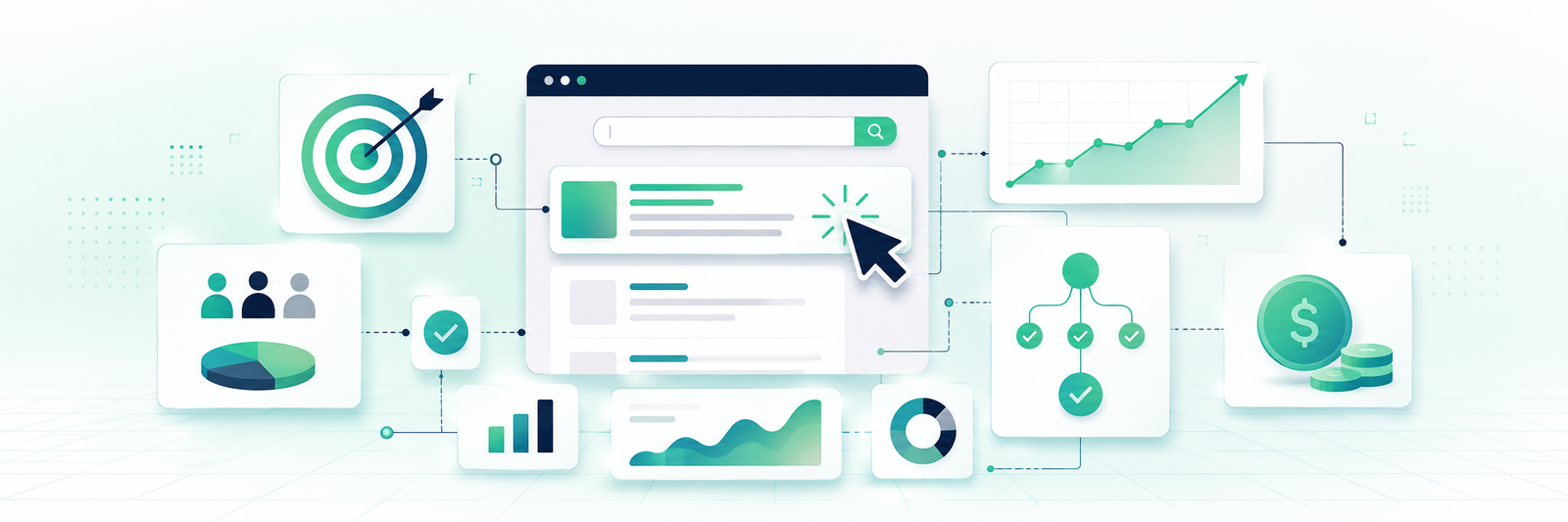
Search or audience → ad → landing page → tracked action → qualified lead or sale → business outcome
Campaign decisions are then made using the deepest reliable signal available. For a lead-generation business, that may be qualified leads, appointments or closed deals—not every form submission. For an ecommerce business, it may be contribution margin, revenue, new-customer value or return on ad spend not traffic alone.
Where the client’s systems and consent setup allow, SEOScaleX can connect advertising data with post-lead outcomes such as contacted leads, qualified leads, booked meetings, opportunities, closed sales and revenue.
Data may be received through CRM access, scheduled exports or offline conversion imports from platforms such as HubSpot, Zoho CRM, Salesforce, LeadSquared, etc.
This allows us to measure metrics such as cost per qualified lead, lead-to-opportunity rate, pipeline value, customer acquisition cost and return on ad spend when accurate sales and revenue data is available.
If CRM or revenue data cannot be shared, we optimise toward the deepest reliably tracked conversion and clearly state the resulting measurement limitations.
What Are PPC Ads and How Does PPC Advertising Work?
PPC ads are paid digital advertisements in which the advertiser may pay when someone clicks the ad. They can appear on search engines, websites, shopping results, video platforms, apps and social networks.
Depending on the platform and campaign objective, advertisers may also be charged or optimised around impressions, views, conversions or conversion value.
PPC advertising usually works through an automated auction. When a person searches, browses or matches an audience condition, the advertising platform evaluates eligible ads using factors such as bid, predicted performance, relevance, quality and campaign settings.
Winning the auction does not simply mean offering the highest amount; useful targeting, strong creative, an appropriate landing page and reliable conversion data all influence performance.
The advertiser controls the budget, targeting and campaign settings. The platform delivers the ads, records interactions and uses available signals to optimise delivery. A PPC agency manages the strategy and ongoing decisions around that system so the account is judged on business outcomes rather than clicks alone.
PPC Ads vs Organic Search Results
PPC ads buy eligible visibility through an advertising platform and can begin appearing after campaign approval. Organic search results are earned through relevance, quality and search optimisation over time. PPC can capture immediate demand, while SEO can build longer-term visibility; many businesses use both as part of one search strategy.
PPC Management Services India: Built Around the Buying Journey
Our PPC management begins with the commercial model, not a default campaign template. We consider what you sell, the value of a conversion, sales-cycle length, target locations, margins or allowable acquisition cost, seasonality, existing demand and the amount of data available.
That groundwork determines where to advertise, which campaign types to use, what to measure and when to scale.
PPC Account Audit
Already running ads? We examine account structure, settings, conversion actions, search terms, keywords, negative keywords, audiences, bids, budgets, assets, landing pages and historical performance. The audit separates urgent tracking or spend problems from longer-term testing opportunities.
You receive a prioritised view of:
- spend that is not supporting the stated objective;
- missing, duplicated or misleading conversion actions;
- irrelevant search demand and negative-keyword gaps;
- campaigns competing for the same audience or query;
- budget constraints and inefficient allocation;
- weak ad-to-landing-page alignment;
- feed or asset issues affecting delivery; and
- realistic next actions based on available data.
PPC Strategy and Forecasting
Before campaign creation, we translate the business target into a working media plan. This can include channel selection, keyword and audience research, campaign architecture, location and device strategy, conversion definitions, creative requirements, landing-page recommendations, budget allocation and testing priorities.
Forecasts are treated as planning estimates, not guarantees. Actual cost per click, conversion rate, lead quality and sales performance depend on competition, offer strength, website experience, tracking quality, approval speed and market response.
Campaign Setup and Restructuring
We build new accounts and restructure existing ones with clear naming, logical segmentation and clean measurement. Setup may include campaigns, ad groups or asset groups, keyword match types, negative-keyword lists, audiences, locations, schedules, devices, bidding, budgets, ad assets, URL parameters and brand-safety controls.
Where an existing account contains useful history, we avoid unnecessary resets. Changes are phased where preserving learning and performance stability matters.
Keyword, Search-Term and Competitor Research
Keyword research identifies high-intent demand, supporting queries, exclusions and the language customers use. After launch, the search-terms report reveals the real queries that triggered ads. We use it to add relevant opportunities, remove waste and improve the relationship between query, ad and landing page.
Competitor research helps us understand messaging, offers and auction pressure. It does not mean copying a competitor’s claims or blindly bidding on every competitor brand.
Ad Copy and Asset Development
Good PPC copy makes the offer clear before the user clicks. We write and test headlines, descriptions, calls to action and relevant ad assets around search intent, differentiators and landing-page content.
Landing Page Review and Conversion Rate Optimisation
Paid traffic cannot compensate indefinitely for a confusing page, weak offer or broken form. We review message match, page speed, mobile usability, trust signals, form friction, calls to action and post-submit journeys. Recommendations are prioritised by likely impact and implementation effort.
Every PPC engagement includes a review of the landing pages used by the campaigns. We assess message match, page structure, mobile usability, loading speed, form friction and conversion tracking, then provide prioritised recommendations.
When CMS access is provided, SEOScaleX can implement minor copy and layout changes. The standard scope includes optimisation of up to 2 existing landing pages per month. New landing-page copywriting, UI design, custom development, additional pages and A/B or CRO testing are scoped and quoted separately unless specifically included in the proposal.
Conversion Tracking and Attribution
PPC decisions are only as reliable as the measurement behind them. Depending on the approved scope and technical feasibility, the setup can include Google Tag Manager, Google Ads and GA4 conversion actions, Enhanced Conversions, Meta Pixel and Conversions API, LinkedIn Insight Tag, ecommerce values, call tracking, CRM integrations and offline conversion imports.
We agree which actions are primary outcomes and which are diagnostic micro-conversions. A thank-you page, phone call or button click is not automatically treated as equal to a qualified opportunity or completed sale.
Ongoing PPC Advertising Management
Managed PPC is continuous work, not a one-time setup followed by automated bidding. Depending on account volume and available data, ongoing management can include:
- search-term reviews and negative-keyword additions;
- bid, budget and target adjustments;
- ad and asset testing;
- audience and location refinement;
- feed and product-group review;
- landing-page observations;
- conversion and tag diagnostics;
- placement and brand-safety checks;
- pacing against monthly budgets;
- lead-quality or revenue feedback analysis; and
- clear records of tests, findings and next actions.
Changes are made with context. Large budget moves, bidding changes and campaign restructures can affect delivery, so we do not optimise simply to create activity inside the account.
Google Ads Management Services
As a Google PPC agency, SEOScaleX selects campaign types according to intent, economics, creative readiness and measurement, not because every available format needs to be used.
Google Search Ads
Reach people actively searching for a relevant product, service or solution. We manage keyword selection, match types, negatives, ad copy, assets, bids, locations, schedules and search-term quality to improve the chance that spend reaches useful demand.
Search campaigns are often suitable for lead generation, local services, B2B enquiries and products or services with established search demand.
Google Shopping Ads
Shopping ads use Merchant Center product data to show product information such as image, price and store name. Effective management therefore depends on more than bids: feed quality, titles, categories, pricing, availability, landing pages and conversion values all matter.
Performance Max Campaigns
Performance Max can access Google inventory across Search, YouTube, Display, Discover, Gmail and Maps from one goal-based campaign. We use it when the conversion goals, assets, data and budget make it suitable, while monitoring whether it adds incremental value alongside Search and Shopping activity.
Automation still requires human decisions about conversion goals, audience signals, creative assets, exclusions, budgets and business priorities.
Display Advertising
Display campaigns can support reach, consideration and remarketing across websites and apps. We plan targeting, placements, exclusions, frequency and creative around the job the campaign needs to do. Display is not presented as a direct-response channel by default when the objective and evidence do not support that assumption.
YouTube Advertising
YouTube can help demonstrate products, build consideration, remarket to previous visitors and support action-oriented campaigns. The format, hook, message and landing-page journey must suit how users consume video.
Demand Gen Campaigns
Demand Gen campaigns can reach users across visual Google surfaces including YouTube, Shorts, Discover, Gmail and Maps. We assess audience strategy, creative depth and conversion history before recommending them.
Remarketing and Customer Retention Campaigns
Remarketing can reconnect with people who viewed products, visited key pages or began an action without completing it. For businesses with appropriate first-party data and consent, customer lists may also support retention, cross-sell or reactivation campaigns.
Audience use remains subject to platform policies, data availability and applicable privacy requirements.
App Campaigns
For eligible mobile apps, campaigns may optimise toward installs or valuable in-app actions. This requires correctly configured app analytics, conversion events and creative assets.
Microsoft Advertising
Microsoft Ads can provide additional search coverage for businesses whose audience and economics justify the channel. It can complement Google Ads rather than simply duplicate it.
PPC Services for Different Growth Models
PPC for Lead Generation
A low form-fill cost is not success if the enquiries are irrelevant, unreachable or unlikely to buy. Our pay per click management for lead-generation businesses is designed around lead quality as far as the available systems allow.
The programme can include:
- intent-led Search campaigns;
- location, schedule and device controls;
- call and form tracking;
- landing-page and form-friction review;
- spam and irrelevant-query reduction;
- lead-status feedback from sales or CRM data;
- offline conversion imports; and
- optimisation toward qualified or closed outcomes once enough reliable data exists.
The client’s sales follow-up speed, qualification process and CRM discipline materially affect what can be learned from the campaigns.
PPC for Ecommerce
For ecommerce businesses, revenue alone can hide margin, returns, cancelled orders and new-versus-repeat customer differences. We structure PPC advertising management around the most useful commercial data available.
Work may include:
- Google Shopping and Performance Max;
- brand and non-brand Search separation;
- Merchant Center and product-feed review;
- category, product and margin-based segmentation;
- dynamic remarketing;
- promotion and seasonal planning;
- transaction value validation; and
- analysis of ROAS, cost per acquisition and revenue mix.
PPC for B2B and Long Sales Cycles
B2B PPC often produces a smaller number of higher-value conversions. Account structure, message specificity, landing-page depth and CRM feedback therefore matter more than chasing raw lead volume.
We can separate research intent from buying intent, align ads with priority services or account segments, track booked meetings and opportunities, and use sales-stage data when it is available and suitable for optimisation.
PPC for Local and Multi-Location Businesses
Local campaigns require accurate geographic targeting, service-area alignment, call measurement, location-specific messaging and careful handling of overlapping markets. Multi-location businesses may also need budget rules and reporting by city, region or branch.
PPC for Startups and New Offers
New businesses may have limited conversion history and uncertain economics. We start with clear hypotheses, controlled budgets and a realistic learning plan. Early data is used to judge demand, messaging and funnel performance before aggressive scaling.
PPC can validate an offer quickly, but it cannot manufacture product-market fit or guarantee profitable acquisition.
When PPC Campaigns Underperform
Poor PPC performance rarely comes from one isolated setting. Common causes include:
The Wrong Conversion Is Guiding Bids
If page views, unqualified forms or duplicate events are treated as primary conversions, automated bidding can optimise toward activity that looks useful but has little commercial value.
Search Intent and Offer Do Not Match
A keyword can look relevant while the underlying query is informational, job-seeking, price-shopping or otherwise unlikely to convert. Search-term analysis and negative keywords help reduce this mismatch.
The Landing Page Creates Friction
Slow load times, weak proof, vague copy, a long form or a poor mobile experience can waste strong traffic after the ad has done its job.
Budgets Are Spread Too Thinly
Running too many campaigns, locations or audiences on a limited budget can prevent any one area from collecting enough data to learn.
Lead Quality Never Returns to the Ad Account
When the ad platform sees only a form fill, it cannot know which enquiries became real opportunities. CRM and offline feedback can create a better optimisation signal where the business has the required data and consent.
Automation Runs Without Guardrails
Smart Bidding and automated campaign types can be powerful, but they still depend on accurate goals, adequate data, sensible targets, useful creative and commercial oversight.
Campaigns Are Changed Too Frequently—or Ignored
Constant major edits can disrupt learning, while “set and forget” management allows wasted spend and stale creative to continue. The right cadence depends on spend, volume, seasonality and the size of the change.
Our PPC Campaign Management Process
1. Discover
We learn what the business sells, who it serves, where it operates, how sales happen and what a successful conversion is worth. We also identify margin or allowable-acquisition-cost constraints, priority services or products, seasonality and previous campaign lessons.
2. Diagnose
We review the website, ad accounts, analytics, conversion actions, CRM flow, product feed, competitors and available historical data. Urgent measurement or policy issues are flagged before budget is scaled.
3. Plan
We agree the channel mix, campaign structure, target locations, budgets, conversion hierarchy, landing-page requirements, creative inputs, approval steps and early testing priorities.
4. Build and Validate
Campaigns, ads, assets, audiences and tracking are prepared. Conversion actions, URLs, budgets and key settings are checked before launch. Nothing goes live until the agreed approvals and required access are in place.
5. Launch and Learn
Initial performance is monitored for delivery, tracking accuracy, search quality and obvious waste. Early results are treated as signals, not final conclusions.
6. Optimise and Report
We review queries, audiences, bids, budgets, ads, assets, placements, landing pages and conversion quality. Reporting explains what happened, why it matters, what changed and what comes next.
Recommended operating timeline
- Access and onboarding: 2–3 business days after receipt of complete inputs
- Account, website and tracking review: week 1
- Strategy, tracking and campaign build: 1–2 weeks
- Typical launch: 7–14 business days, after tracking, creative, landing-page and budget approval
- Reporting: monthly report and review call
What We Measure
The reporting framework is selected around the objective and available data.
Core delivery and engagement metrics
- spend and budget pacing;
- impressions and impression share where relevant;
- clicks and click-through rate;
- average cost per click;
- search terms, placements and audience delivery; and
- ad or asset performance.
Lead-generation metrics
- tracked calls, forms, bookings or enquiries;
- conversion rate and cost per lead;
- qualified lead rate and cost per qualified lead;
- opportunity or appointment volume; and
- customer acquisition cost where closed-sale data is available.
Ecommerce metrics
- purchases and purchase conversion rate;
- revenue and average order value;
- cost per acquisition;
- return on ad spend; and
- margin or profit-based measures where reliable data is supplied.
Reports include context, limitations and next actions. Platform-reported conversions are not presented as unquestionable truth when attribution windows, consent, cross-device behaviour, offline sales or tracking gaps affect the picture.
Human PPC Management Supported by Automation
Google Ads can use real-time signals to adjust bids and distribute ads, but automation is not a substitute for commercial judgment. A system will optimise toward the objective it is given—even when that objective is incomplete.
Our role as a PPC marketing agency is to provide the guardrails:
- choose conversion goals that reflect business value;
- decide when Target CPA, Target ROAS or another bidding approach is appropriate;
- protect brand and high-intent demand;
- review what queries, products, audiences and placements consume budget;
- supply accurate creative and feed inputs;
- test without changing too many variables at once; and
- challenge platform recommendations that do not fit the business model.
We use automation where it improves decision-making or execution, while keeping strategy, measurement quality and budget accountability under human review.
Why Choose SEOScaleX as Your PPC Advertising Company?
Commercial Goals Before Vanity Metrics
Campaigns are tied to agreed outcomes such as qualified leads, sales or revenue. Clicks and impressions are useful diagnostic metrics, not the finish line.
Tracking Before Scaling
We identify conversion and attribution gaps before asking you to increase spend. Scaling unreliable data usually magnifies the problem.
Clear Account Ownership
Your accounts and business data should remain accessible to you. We document access and ownership at onboarding and avoid unnecessary dependency on agency-controlled assets.
Strategy That Fits the Business
An ecommerce catalogue, a local clinic and an enterprise B2B service should not receive the same campaign structure, bidding logic or reporting model.
Connected Search Expertise
Paid search can reveal converting queries, offers and landing-page insights, while organic visibility can reduce dependence on paid acquisition over time. Our SEO Services can work alongside PPC where an integrated search strategy makes sense.
Wider Growth Support When Needed
For brands that need multi-channel acquisition, our performance marketing services connect paid media with funnel and revenue measurement. Our social media marketing services support organic content, community and platform presence beyond PPC ads.
Industries We Can Support
The right PPC strategy depends more on the economics and customer journey than the industry label. Potential sectors include:
- ecommerce and D2C;
- education and online learning;
- B2B services and SaaS;
- healthcare and wellness;
- real estate;
- home and local services;
- travel and hospitality;
- financial and professional services;
- automotive; and
- multi-location businesses.
Regulated sectors may require additional platform-policy, legal, consent and approval checks.
PPC Management Pricing in India
PPC management cost depends on the number of platforms and markets, monthly media spend, campaign complexity, catalogue size, tracking requirements, creative volume, landing-page work, reporting depth and CRM or feed integrations.
Pricing information of our PPC Services
Management fee: Starting from ₹25,000 per month for monthly media spend of up to ₹2,00,000. Accounts with higher spend, multiple platforms or more complex requirements may be priced at 12% of media spend or through a custom hybrid model.
Recommended minimum media budget: ₹50,000 per month. Businesses operating in highly competitive industries, targeting multiple locations or promoting several services may require a larger testing budget.
Initial commitment: Three months, followed by a month-to-month engagement with 30 days’ notice.
GST: Additional at the applicable rate.
One-time setup and tracking fee: ₹15,000–₹30,000, depending on the existing account structure, number of conversion actions and technical complexity.
What’s included in this?
The management fee includes campaign strategy, account setup or restructuring, keyword and audience research, ad-copy development, bid and budget management, ongoing optimisation and monthly performance reporting.
Standard Google Ads, GA4 and Google Tag Manager conversion tracking is covered within the agreed setup scope. Static or video creative production, landing-page design and development, ongoing product-feed management, custom dashboards, call-tracking tools, CRM integrations, offline conversion imports and server-side tracking are quoted separately where required. Any third-party software charges are paid by the client.
The advertising budget is paid directly to the relevant advertising platform and remains separate from the SEOScaleX management fee.
Every proposal is prepared after reviewing the website, existing advertising accounts and business model. To provide an accurate quote, we may request your website or app URL, target locations, priority products or services, current advertising platforms, approximate monthly spend, average order or deal value, gross margin or allowable acquisition cost, sales-cycle length, previous results, available creative assets, tracking or CRM setup and preferred launch date.
No responsible PPC agency can promise a fixed ROAS, cost per lead or number of sales before understanding the market, offer, website, sales process and measurement quality. We provide realistic targets after reviewing the available data and continue refining them as the campaigns generate reliable performance information.
What Is Included and What Needs a Separate Scope?
Before onboarding, the proposal should identify responsibility for each item.
| Workstream | Recommended scope wording |
|---|---|
| Media strategy and campaign management | Included for agreed platforms, markets and account count |
| Ad copy | State the included volume and revision rounds |
| Static and video creative | State whether included, client-supplied or separately quoted |
| Landing-page recommendations | State the number of pages and review frequency |
| Landing-page copy/design/development | State whether included or a separate project |
| GA4, GTM and platform conversion tracking | State the standard implementation allowance and developer dependencies |
| Enhanced Conversions / server-side tracking | State eligibility, consent dependencies and any additional fee |
| Call tracking | State provider and third-party charges |
| CRM integration / offline imports | State supported systems and required client/developer work |
| Merchant Center and product feeds | State whether setup, optimisation and disapproval handling are included |
| Reporting and meetings | State cadence, dashboard and attendees |
| Media budget | Paid directly to the ad platform unless agreed otherwise |
Frequently Asked Questions About PPC Services in India
What does a PPC agency do?
A PPC agency plans, creates, tracks and optimises paid advertising campaigns. Work commonly includes research, account structure, targeting, keyword and negative-keyword management, ad copy, bids, budgets, conversion tracking, testing, reporting and landing-page recommendations. The exact scope should be stated in the proposal.
What should I compare when evaluating pay per click agencies?
Compare the proposed scope, relevant experience, case-study evidence, tracking capability, account ownership, reporting, communication, pricing and exclusions. Strong pay per click agencies should be able to explain how they will judge lead or sales quality.
Be cautious of PPC advertising agencies that guarantee results without reviewing your offer, data, website and market.
How do I choose the best PPC services in India for my business?
The best PPC services in India for your business will depend on your objective, market, budget, sales model and technical requirements. Ask each provider to explain the proposed platforms, campaign structure, tracking plan, optimisation process, reporting, account ownership, fees and exclusions.
Give greater weight to relevant evidence and clear commercial reasoning than to rankings or unsupported “best agency” claims.
Which platforms are included in your PPC ads services?
The core scope can include Google Ads formats such as Search, Shopping, Performance Max, Display, YouTube, Demand Gen and remarketing. Microsoft Ads, Meta, LinkedIn, Amazon or app campaigns should be included only when they suit the audience and are confirmed in the proposal.
How quickly can PPC produce results?
Ads can begin receiving impressions and clicks soon after approval and launch, but stable performance takes longer. Tracking validation, auction conditions, conversion volume, sales cycles and testing all affect the timeline. Early data should guide learning; it should not be presented as a guaranteed long-term result.
How much should I spend on PPC in India?
The useful budget depends on search demand, cost per click, geography, conversion rate, sales value and the amount of data needed to make decisions. A budget should be worked backwards from business economics where possible not copied from an unrelated advertiser.
How much do PPC management services cost?
Agencies may charge a fixed monthly retainer, a percentage of media spend, a project/setup fee or a hybrid. SEOScaleX pricing should reflect the platforms, spend, tracking, creative, landing pages, feeds, markets and reporting involved. Media spend and agency fees should be shown separately.
Is ad spend included in the management fee?
Usually, no. The media budget is generally paid directly to the advertising platform, while the management fee pays for strategy, setup, optimisation and reporting. Your SEOScaleX proposal will state both separately.
Who owns my Google Ads account?
The trust-building arrangement is for the client to own the ad account, analytics properties, tag-management container, product feed and business data, while granting the agency appropriate access. Ownership and handover terms should be documented before work begins.
Can you work with our existing Google Ads account?
Yes, where access and account condition allow. We first audit the history, structure and tracking, then decide what should be retained, paused, repaired or rebuilt. Existing data is valuable and should not be discarded without a reason.
How do you track phone calls and offline sales?
Call-tracking software can attribute eligible calls to campaigns, while CRM integrations or offline conversion imports can connect later sales stages with the original ad interaction. The available method depends on the website, CRM, consent, sales process and technical access.
Can you guarantee leads, sales or ROAS?
No responsible PPC advertising company should guarantee a commercial result it does not fully control. Competition, pricing, offer, website experience, stock, sales follow-up, approvals and market changes all influence performance. We can commit to the agreed work, transparent measurement and disciplined optimisation, not fabricate certainty.
Do you manage paid social campaigns too?
Paid social can be included where the audience, creative and funnel support it. Organic content strategy, publishing and community management are handled under our social media marketing services.
How often will my campaigns be optimised?
Monitoring and changes depend on spend, traffic, risk and data volume. Some checks may happen frequently, while major strategic changes need enough evidence and appropriate approval. The service agreement should state the reporting and meeting cadence without implying that constant edits are always beneficial.
What do you need before starting PPC campaign management?
We normally need the website or app URL, business and campaign goals, target locations, priority offers, budget, conversion values or allowable acquisition cost, historical account access, analytics and tracking access, brand assets, landing-page status, CRM or sales process, compliance constraints and launch deadline.
Ready for PPC Management You Can Actually Evaluate?
If your campaigns are difficult to explain, hard to measure or producing activity without enough commercial value, start with a structured review. We will look at the account, website, tracking and business objective before recommending what to repair, stop, test or scale.